How the March plate changes affect your car’s value

New cars enter the market every day, but the defining factor of just how new a car is usually comes down to its number plate. While the standard UK plate might look like a random mix of letters and numbers, the two numbers in the middle show when the car was first registered. This effectively defines its age in the eyes of buyers. That means a car’s number plate plays a big role in how new it feels, even if two cars were built just weeks apart.
Number plates change twice a year – in March and September – to stop the system running out of combinations and keep registrations evenly spaced. Cars registered between March and August carry the year number itself – so in 2026, that’s ‘26’. Cars registered between September and February use the year number plus 50, so ‘76’ in this case. It’s a simple system, but one that has a powerful influence on perception and pricing.
But what does this mean for your car, and how can this affect resale values? Read our guide below to understand when is the best time to sell, and when you’re ready, get your free, instant valuation.
- Why is there a surge of new cars in March?
- How much value will I lose in March?
- When is the best time to sell my car?
- Does a brand-new plate matter if the car is poorly maintained?
- Do private plates hide depreciation?
Why is there a surge of new cars in March?

March is especially significant because it’s when the ‘new’ year plate arrives. There’s a strong sense of prestige attached to having the newest registration, so many drivers hold off buying a brand new car specifically to get that latest plate, which leads to a surge in new car purchases. This is similar in September, then the next round of new registrations hit the roads.
As those new cars are delivered, a huge number of part exchange vehicles enter the market at the same time as drivers upgrade their old car. This sudden increase in supply creates a ripple effect, affecting used car values across the board, from nearly-new models to older cars already on the road.
Not only are used cars instantly categorised as being another year older, causing it to depreciate in value, it’s also up against a much more saturated market, driving down costs as supply increases.

What happens to my car’s value when there’s a new plate?
Even if two cars are mechanically identical, the one with the latest plate will usually feel more desirable, simply because it looks newer at a glance. That demand pulls attention toward brand-new registrations and away from any older cars. Additionally, all cars are suddenly seen as a year older, even though nothing about them has physically changed.
A spike in new registrations means a surge of part exchange vehicles entering the used market all at once. More cars competing for attention naturally puts pressure on prices, especially in popular segments where buyers have plenty of choice. The combination of prestige, pricing and increased part exchange is what creates this ripple effect.
How much value will I lose in March?
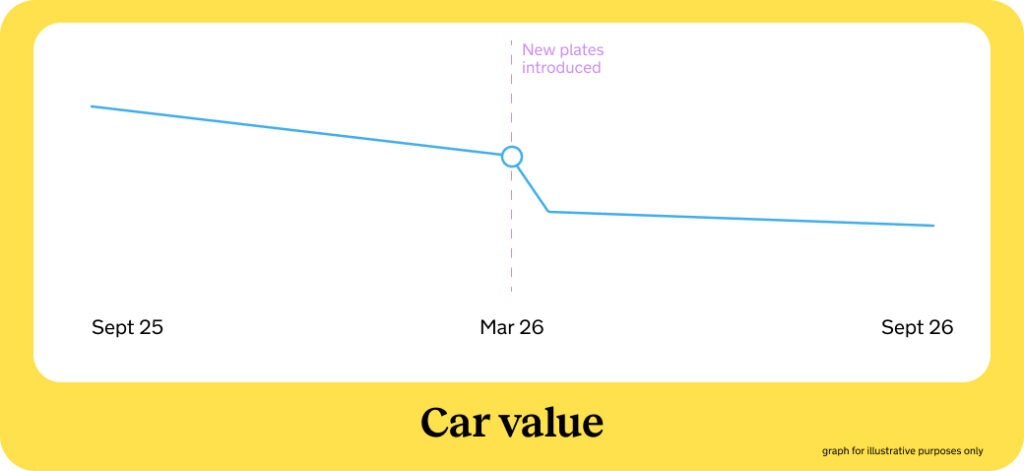
The March plate change doesn’t suddenly wipe thousands off your car’s value overnight, but it does tend to nudge prices down, particularly for newer cars.
For nearly-new cars (e.g. under three years old), the impact is usually felt the most. Values can dip by a few percentage points in the weeks after March, especially if that model is popular and lots of similar part exchanges hit the market at the same time. It’s less about the plate itself and more about increased supply and stronger competition as some buyers look to get a brand new model.
For older cars, the effect is much smaller. Once a car is several years old, condition, mileage and service history matter far more than the exact registration. A March plate change might still influence buyer perception slightly, but it’s unlikely to cause a dramatic drop on its own.
When is the best time to sell my car?
In general, the best time to sell is often just before a new number plate change, particularly ahead of March. At this point, demand is strong from buyers looking to avoid the new-car rush, and the market hasn’t yet been flooded with part exchange vehicles. It will also be seen as being a year newer than after the plate change.
September brings a similar, though usually smaller, effect. While it doesn’t carry the same ‘new year’ weight as March, it still introduces a fresh plate and another wave of registrations.
If you’re planning ahead, aiming to sell a few weeks before March or September can help you stay ahead of these shifts. You’ll be selling into a market with strong demand, limited supply and the most favourable perception of your car’s age, all of which stack the odds in your favour when it comes to value.
Does a brand-new plate matter if the car is poorly maintained?
A newer number plate can certainly help with first impressions, but it can’t hide poor maintenance. While a newer plate might make a car look better on paper, buyers and dealers will still look closely at condition, history, and how well the car has been cared for. If servicing has been skipped, tyres and brakes are worn, or there are warning lights on the dash, the appeal of that newer registration quickly fades.
In practice, maintenance and condition usually outweigh the plate once serious pricing decisions are made. A well-looked-after car on an older plate will almost always be more desirable than a newer-registered car that’s been neglected.
When you sell with Motorway, you’ll be asked to give details about your car, including its condition, its service history and any damage. You’ll also be asked to take accurate photos of your car. Our dealers base their offers on the information provided in your vehicle’s profile, so they need to know about any wear and tear, no matter how superficial. If your vehicle has imperfections that are not disclosed before the sale, it may result in a reduced offer from the dealer or cancellation.
Do private plates hide depreciation?
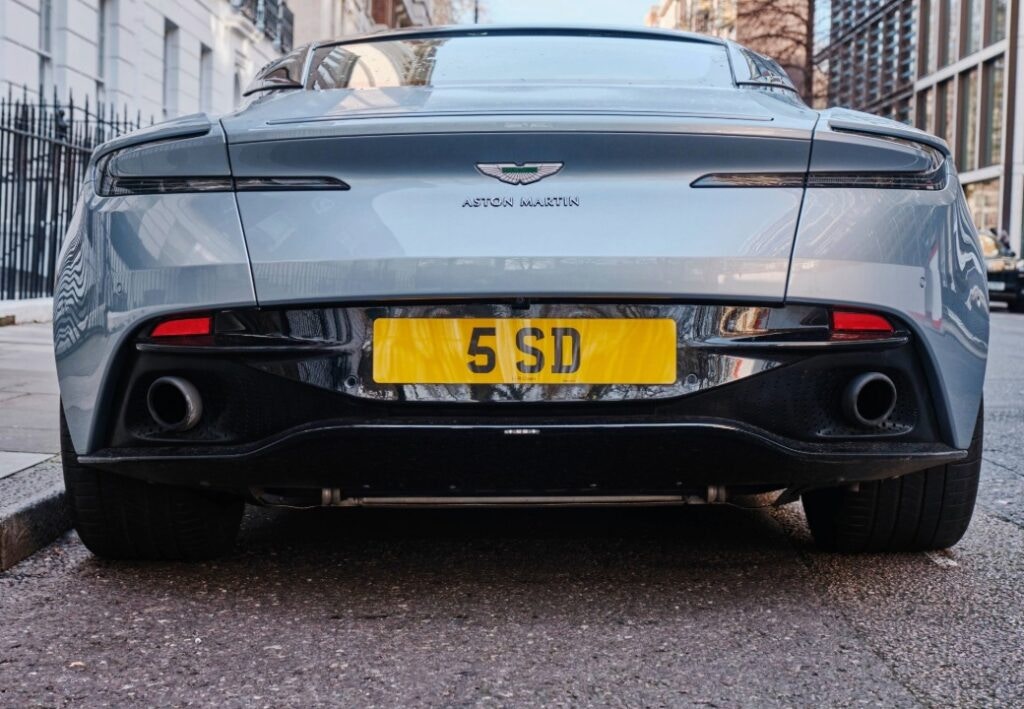
Private plates are personalised registrations that sit outside the standard age-based number plate system. Unlike regular plates, they don’t display the two-digit year identifier that signals when a car was first registered, or they use a number combination unrelated to the vehicle’s age. This means that, as well as adding some fun to the front and rear of your car, the instant recognition of your vehicle’s age is also ‘hidden’.
This can soften the appearance of depreciation, but it doesn’t make it disappear. To a casual observer, the car may feel more timeless, especially around March and September when standard plates suddenly date.
However, private plates don’t change how a car is valued behind the scenes. Dealers and serious buyers still look at the original registration date, mileage, condition and service history when setting a price. The market always knows how old a car really is, even if the plate doesn’t advertise it. In short, a private plate can mask depreciation visually, but it doesn’t prevent it financially. This might help with perception, but it won’t stop the underlying numbers from doing their thing.
It’s also worth noting you can’t buy a private registration that makes your vehicle look newer than it is – the DVLA will restrict you using any number plates newer than when your car was made.
The information provided on this page is for general informational purposes only and should not be considered as professional advice.