What documents do I need to sell my car?
To sell your car, you need your V5C logbook, service history, MOT certificates, and a form of valid photo ID. Having receipts for any repairs, parts, or insurance work is also a big plus. Getting your paperwork together is the very first thing worth doing before you start your car selling journey at Motorway.
Key takeaways
- V5C (Logbook): The most essential document; selling without it is difficult and discourages buyers.
- Service History: A stamped service book or digital records significantly increase the resale value.
- Transaction Records: If a deposit is involved, it’s a good idea to have four receipts (two for the deposit, two for the final balance).
- Ownership Duration: If you’ve owned the car for less than six months, Motorway requires a valid VAT receipt as proof of purchase.
- Payment Safety: Only accept cash or CHAPS bank transfers to avoid common car-selling scams.
Most car documentation is digital these days, but it’s still a good idea to keep any paperwork related to your car together in a folder, somewhere safe indoors. Whenever you get a new invoice or receipt, pop it straight into that folder when you get home. Not only does it keep everything in one place, but having well-organised documentation can help increase the price of your motor when it comes to selling.
Selling a car can be complicated, keeping your paperwork in order is key.

The documents you need to sell a car are as follows:
- V5C – Logbook
- Valid photo ID (driving licence or passport)
- Four receipts
- Service history
- MOT certificates
- Insurance repairs
- Parts receipts
- How to avoid fraud when selling a car
A valid photo ID, such as your driving licence or passport, is needed so the buyer can verify your identity matches the name on the V5C. Most dealers and private buyers will ask for this as standard.

Your V5C logbook
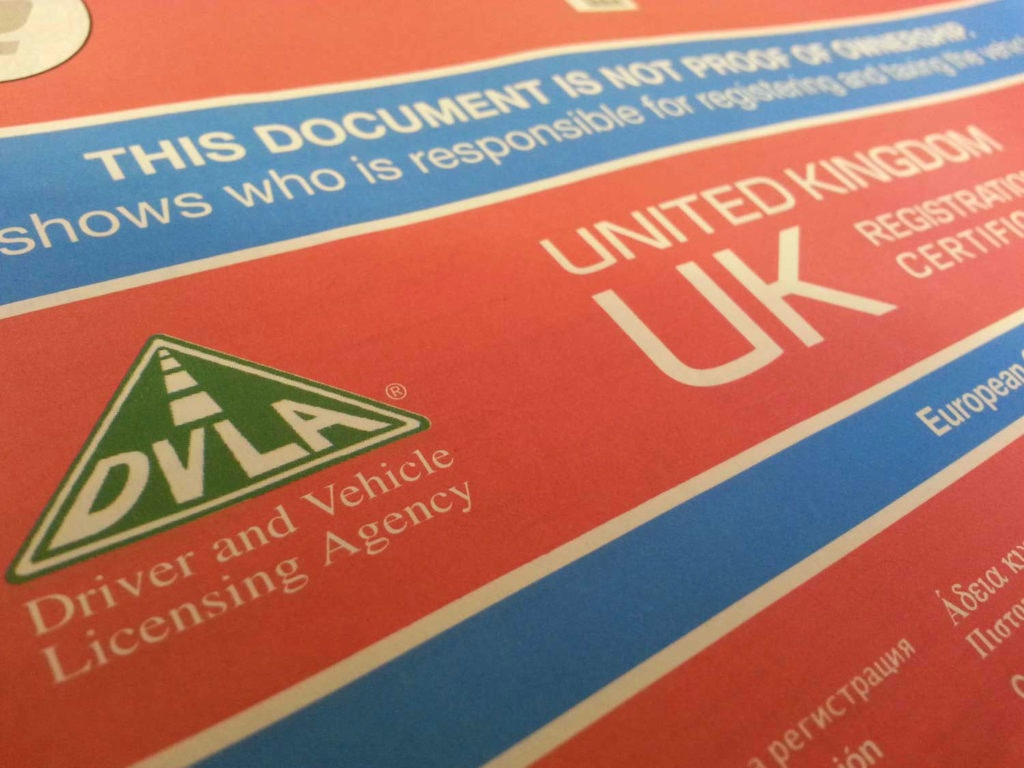
Your car’s V5C or logbook as it’s known is the most crucial part of the paperwork puzzle when it comes to selling your car.
Yes, you can sell a car without a V5C, but it raises questions for buyers and can significantly reduce confidence in the sale. If you’ve lost yours, you can apply for a replacement through the DVLA. It usually takes around two to four weeks, so it’s worth doing this early.
The V5C or Logbook holds all the ownership info for your vehicle.
You used to have to fill in Section 6 of the form and send it back to the DVLA to sign the ownership over to the purchaser. While you can still do this, there’s now a far easier way by completing this part online.
In a week or so the new owner will receive a fresh V5C in their name.
Do I need a bill of sale to sell my car?
There is no legal requirement to use a formal bill of sale when selling a car privately in the UK, but having a written record of the transaction protects both you and the buyer if anything is disputed later.
At minimum, any written receipt should include the following details:
If a deposit is involved, you must create four physical receipts to ensure both parties have records of every stage:
- Deposit Stage: 2 receipts (1 for buyer, 1 for seller)
- Final Balance Stage: 2 receipts (1 for buyer, 1 for seller)
If you sell on Motorway, the transaction is handled through verified dealers, so the paperwork process is straightforward and clearly guided from start to finish.
Service history
A full service history is one of the biggest selling points your car can have. It shows a buyer that the car has been properly cared for, and it can meaningfully increase its value.
Your service history book, the one that sits in the glovebox alongside the manual, should be stamped by the garage or dealership whenever you take your car in for a service. Always check it’s been stamped before you drive away.
Make sure the book has been stamped before grabbing those keys and going.
Many newer cars now have digital service records held by the manufacturer or dealership rather than a physical book. If your car’s service history is stored online, you can usually access it through the manufacturer’s website or app, or ask your dealer to provide a printout. Digital records carry the same weight as a stamped book, so do not worry if you do not have a physical copy.
If your service book has not been stamped and you do not have digital records, try to find the receipts for the services. That will either prove you have had the work done, or if you still want the book stamped you could go back to the garage or dealership, receipts in hand, and ask for the book to be filled out.

MOT certificates
All your MOT tests since around 2006 are available online, so physical certificates are less critical than they used to be. You can check your car’s full MOT history for free using our MOT checker.
That said, if you’re selling an older car, it’s worth keeping or tracking down the paper copies. A complete MOT history, whether digital or physical, reinforces that your car has been properly maintained and gives buyers added confidence.
Insurance repairs
Most cars pick up the odd knock or scrape over the years, and that is nothing to worry about.
If you have a copy of any repair work carried out, whether privately or through an insurance claim, it can go a long way to reassure a potential buyer that everything has been properly looked after.
The same applies to any remedial work you have had done before putting your car up for sale.
Keeping these records shows you have been thorough, and that kind of transparency builds trust and helps your car sell with confidence.
Parts receipts
It is worth keeping any and all parts receipts you have. This especially applies to older cars where you are more likely to have had work carried out at an independent garage.
If you purchase and fit your own parts, receipts showing the brand, date, and mileage at the time of fitting give a buyer clear proof of what is on the car and when it was done.
This is particularly valuable for upgrades or replacements that add to your car’s appeal, such as new tyres, brake discs, or a replacement battery. Documented improvements can help justify a higher price and give buyers the confidence to commit.
What proof of purchase do I need to sell on Motorway?
If you’ve bought your car in the past six months, you’ll need proof of purchase to sell on Motorway. This must be a valid VAT receipt from the dealer you purchased it from. Motorway does not list cars that have been purchased from private sellers (not a dealer) within the last six months.
Selling a car on finance? If your car is on a PCP or HP finance agreement, you can still sell on Motorway. It helps to have your finance agreement reference number and an up-to-date settlement figure from your lender. Motorway handles the settlement process for you, paying off the remaining balance to your finance company and passing any surplus on to you. Find out more about how to sell a car on finance.
How to sell your car safely
These tips apply specifically to private sales, where you are dealing directly with an individual buyer. If you sell on Motorway, payment is handled securely through verified dealers, so most of these steps are taken care of for you.
If you’re selling privately, a few simple precautions will help you stay in control and protect yourself throughout the process.
Here’s what to keep in mind:
- Only accept cash in full or a CHAPS bank transfer
- If accepting a cheque arrange a date for the buyer to collect once funds have cleared
- Don’t allow payment via PayPal, Western Union or other money transfer services
- Always accompany test drives
- Never give the buyer your keys, until you’ve had full payment
- Have a family or friend present when buyers come to view your car
- Make sure the person has a valid driving licence
- Check that the buyer has insurance cover to test drive your car
- Ask for the buyers’ full address, anyone legitimate wouldn’t worry about giving you this information
- Don’t entertain anyone posing as an ‘exporter’, they’ll expect you to pay for the ‘shipping fees’ to have your car sent abroad
Selling your car is relatively straightforward, no matter if you choose a private sale, trade-in, car buying site or an online service like Motorway.
Just make sure you keep all your paperwork together and follow our fraud prevention tips. Over seven million cars are sold in the UK each year, the vast majority without an issue.
If you would rather skip the safety checklist altogether, selling on Motorway means you deal only with verified dealers, receive secure same-day payment, and have free home collection, so there is no need to invite strangers to your door.

Frequently asked questions
Do I need to tell the DVLA when I sell my car?
Yes. Once you hand over the car, you must notify the DVLA so the vehicle is no longer registered in your name. The easiest way to do this is online using the V5C logbook.
Once you complete the transfer, the DVLA updates its records and sends the new owner a fresh V5C in their name — usually within about a week.
Until you notify the DVLA, you are still the registered keeper. That means you could be held responsible for any fines, parking charges, or road tax linked to the vehicle after the sale. Do not skip this step.
If you sell on Motorway, the dealer will handle the V5C transfer as part of the handover process, so you will be guided through exactly what to do.
What documents do I need to sell a car with outstanding finance?
You will need three things: a settlement figure from your lender, your finance agreement documents, and written confirmation of settlement once the finance is cleared.
If your car is on a finance agreement, such as PCP or HP, the finance company holds a financial interest in the vehicle. This affects what paperwork you need before you can sell.
Here is what each document involves:
- A settlement figure from your lender — this is the exact amount needed to clear the finance, valid up to a specific date
- Your finance agreement documents — so the buyer or dealer can see the terms and confirm the type of agreement
- Confirmation of settlement — once the finance is paid off, get written confirmation from your lender that the agreement is closed
You cannot legally transfer clean ownership to a buyer while finance is outstanding without disclosing it. Selling a car with undisclosed finance is a criminal offence.
If you sell on Motorway, the dealer will check for outstanding finance as part of the process. You can also use our guide to selling a car on finance to understand your options before you start.
Do I need a vehicle history report to sell my car?
You are not legally required to provide a vehicle history report, but it can make your car easier to sell and help justify your asking price.
A history report typically covers:
- Number of previous registered keepers
- Full MOT history, including any advisories
- Recorded mileage at each MOT
- Whether the car has been written off, stolen, or has outstanding finance
Most dealers and serious private buyers will run their own check before agreeing to buy. Having a report ready removes a common source of hesitation and keeps the process moving.
You can check your car’s MOT history for free on Motorway’s MOT checker.
How can I get more money when I sell my car?
A few things make a real difference to the price you get. A full service history, a clean MOT record, and a car that has been well looked after all give buyers more confidence, which shows up in the offers you receive.
Selling method matters too. Accepting the first offer you see rarely gives you the full picture of what your car is worth. On Motorway, your car is shown to verified dealers from across the UK who compete to buy it, so you get a range of competitive offers without having to negotiate anyone down yourself.
Get a free valuation to see what your car could be worth today.
Ready to sell?
Need to sell your car, or want to understand more about documentation or maintenance? Check out more of our guides here, covering everything from the paperwork you need when buying and selling, to various notices you may need to file with the UK’s driver and vehicle licensing agency.
The information provided on this page is for general informational purposes only and should not be considered as professional advice.