Is my car insured? How to check if your car has insurance
Last updated: September 2026
Is my car insured? It sounds like a simple question, but plenty of drivers lose track of a renewal date or need to confirm a car’s cover. You are not alone in wanting to be sure.
Even if you know the basics, insurance can feel confusing, especially around renewing, switching insurer, or getting ready to sell. The good news is that checking your status takes about a minute, and it is free.
This guide shows you how to check if your car is insured and how to fix a record that looks wrong. It also covers why staying insured matters right up to the day you sell your car.
- How to check your car is insured
- Why check if you’re insured?
- Auto-renewal for car insurance
- Checking your records/files for insurance documents
- How to make sure your car is legally insured

How to check if your car is insured for free
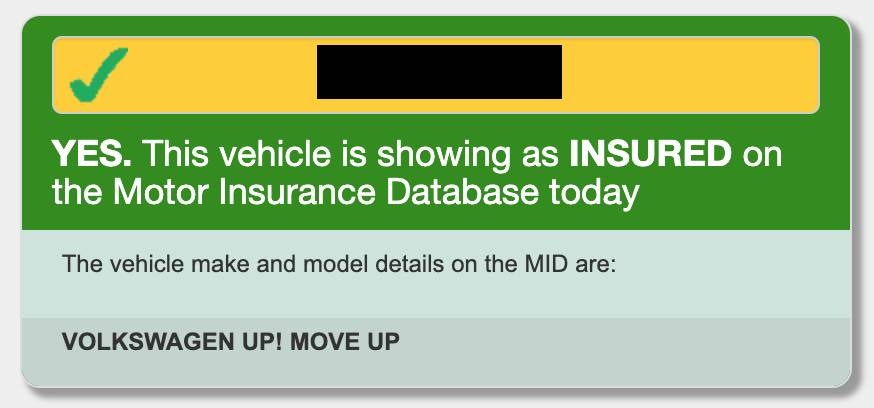
The quickest way to check is the Motor Insurers’ Bureau (MIB) Check Your Vehicle service. It uses Navigate, the central record of all insured vehicles in the UK.
To run a free check on your own car:
- Go to the MIB Check Your Vehicle service.
- Choose the personal check option.
- Review and accept the terms.
- Enter your registration number to see the result.
The tool gives you a clear insured or uninsured result, and confirms whether a live policy exists. It does not show the policy dates or the name of your insurer.
It is worth checking whenever you switch insurer, buy a used car, or get ready to sell your car.
Why checking your insurance matters
So, is my car insured, and does it matter? Driving without insurance is illegal, and the consequences are serious. According to gov.uk, the penalties for driving without insurance include a £300 fixed penalty and six penalty points.
If the case reaches court, you face an unlimited fine and disqualification, and police can seize the car. A gap in cover is not always deliberate. A missed renewal, a failed payment, or a change of address can leave you uninsured without realising.
Being uninsured can also be expensive. If you cause an accident without cover, you could be liable for the repair and injury costs yourself, on top of the penalties above.
Those costs add up. According to the Association of British Insurers, the average motor insurance claim paid in 2024 was £4,900, 13% higher than in 2023. A quick check is the simplest way to stay in control.

Auto-renewal and why you should still check
Many policies renew automatically. Your insurer renews your existing cover unless you tell them not to, which reduces the risk of an accidental gap.
Auto-renewal is helpful, but it is not foolproof. A payment card can expire, a reminder email can go unread, or a policy can lapse after a change of address. It is still worth confirming your status directly.
If you plan to switch insurer, cancel the auto-renewal in good time. That way you avoid paying for two overlapping policies, or leaving a gap between them.

How insurance differs from tax and MOT
It is easy to assume that tax, MOT, and insurance all sit in one place. They do not. Insurance status is held on the MIB’s Navigate database, separate from the DVLA records for tax and MOT.
A DVLA vehicle check confirms tax and MOT, but it does not confirm insurance. To cover both, run an insurance check and use a free car tax check as well.
You can also check your car’s MOT in the same way. Remember that any car not declared off the road with a SORN must be insured at all times, even when parked on a driveway.

How to make sure your car is legally insured
Even with confirmation emails, a quick MIB check is worth doing to be sure everything went through. It takes seconds and gives you peace of mind.
If you are not using your car, you have two legal options. Keep it insured, or declare it off the road with a Statutory Off Road Notification (SORN) through the DVLA.
Staying insured is about more than avoiding a fine. It protects you, your car, and everyone else on the road.
Frequently asked questions
How do I find out who my car is insured with?
The free check only tells you whether a car is insured, not who the policy is with. Look through your bank or card statements for payments to an insurer, then search your email, including junk and spam folders, for a certificate.
You can also submit a data request to the MIB for the records it holds about you. This is free unless the request is unreasonable, and the MIB aims to reply within one month.
What should I do if my car shows as uninsured?
A new or renewed policy can take up to seven days to appear on the record. You are still covered from your policy start date, so keep your certificate as proof. If your car still shows as uninsured after that, contact your insurer, quote your policy number, and ask them to correct it.
Can I check if someone else’s car is insured?
The free service is for your own car, or a car you have the legal right to drive. To confirm another car’s status, for example after an accident, your insurer or solicitor can carry out that check. If you suspect a driver is uninsured, report it to the police.
Do I need insurance if my car is off the road?
Only if it is not declared off the road. Any car kept on a public road must be insured. A car on private land must be either insured or declared off the road with a SORN.

The information provided on this page is for general informational purposes only and should not be considered as professional advice.