Miles per kWh explained: what’s good, average and better
- What does miles per kWh mean?
- How to calculate miles per kWh
- What is a good miles per kWh figure?
- Real-world factors that change miles per kWh
- Miles per kWh examples by EV type
- How miles per kWh affects charging cost and range
- How to improve your miles per kWh
- Frequently asked questions
- Summary and key takeaways
Miles per kWh explained simply: it tells you how far your electric car travels on each unit of electricity it uses. Think of it as the EV equivalent of MPG. Understanding it helps you predict real-world range, estimate charging costs, and compare electric cars on equal terms — not just by the headline battery size on a spec sheet.
What does miles per kWh mean?
Miles per kWh measures how many miles an electric car covers using one kilowatt-hour (kWh) of electricity. The higher the number, the further the car travels on each unit of energy. It connects directly to two other figures you will see on any EV listing: battery capacity and range.
- Miles per kWh — efficiency: how far you go per unit of energy
- kWh — battery capacity: how much energy the battery stores
- Range — the product of the two: capacity multiplied by efficiency
- MPG — the petrol equivalent, measuring miles per gallon of fuel
- WLTP range — the official lab-tested range figure, often optimistic
Miles per kWh vs MPG
MPG tells you how far a petrol or diesel car travels on one gallon of fuel. Miles per kWh does the same job for electric cars, swapping gallons for kilowatt-hours. The principle is identical: a bigger number means better efficiency and lower running costs.
Why EV efficiency is measured this way
Electricity is bought and sold in kWh, so measuring efficiency in the same unit makes cost calculations straightforward. It also lets you compare cars with different battery sizes fairly, because a large battery does not automatically mean an efficient car.
What a higher or lower number means
A car achieving 4 miles per kWh will travel twice as far on the same charge as one achieving 2 miles per kWh. That gap translates directly into range and charging bills, especially for drivers who cover long distances regularly.

How to calculate miles per kWh
The formula is straightforward. Divide the miles driven by the kWh of energy used. You can apply this to official specs or to your own real-world data from a trip computer or charging app.
| Method | Formula | Example |
|---|---|---|
| From spec (range and battery) | Range ÷ usable battery capacity | 240 miles ÷ 60 kWh = 4.0 mi/kWh |
| From real-world data | Miles driven ÷ kWh used | 80 miles ÷ 22 kWh = 3.6 mi/kWh |
Formula using range and battery capacity
Take the official range figure and divide it by the usable battery capacity. This gives you the manufacturer’s assumed efficiency. It is useful for comparing models before you buy.
Formula using real-world miles driven and kWh used
Check your car’s trip computer for miles covered and energy consumed, or use your charging app to see how many kWh went in. Divide miles by kWh for an accurate real-world figure that reflects your actual driving.
Why usable battery capacity matters more than nominal capacity
Manufacturers quote a gross (nominal) capacity but reserve a buffer at each end to protect battery health. The usable capacity is always lower. Using gross capacity in your calculation will make efficiency look better than it really is, so always use the usable figure where available.
What is a good miles per kWh figure?
Efficiency varies widely by vehicle type, driving conditions, and weather. As a general guide, anything above 3.5 miles per kWh is solid real-world performance for most drivers.
| Rating | Miles per kWh | Typical context |
|---|---|---|
| Excellent | 4.5 and above | Small city EVs, gentle urban driving |
| Good | 3.5 – 4.4 | Efficient family hatchbacks, mixed driving |
| Average | 2.5 – 3.4 | Mid-size SUVs, motorway-heavy routes |
| Poor | Below 2.5 | Large SUVs, performance EVs, cold weather |
Typical efficiency benchmarks for modern EVs
Most mainstream EVs land between 3 and 4 miles per kWh in everyday use. Smaller, lighter cars consistently outperform larger ones because they have less weight to move and a smaller frontal area cutting through the air.
How car size and drivetrain affect efficiency
Heavier vehicles need more energy to accelerate and maintain speed. Dual-motor all-wheel-drive setups add power but also add weight and mechanical losses, which reduces efficiency compared with a single-motor front-wheel-drive equivalent.
Why published figures can be misleading
Official WLTP figures are measured in controlled lab conditions. Real-world efficiency is typically 10–20% lower, sometimes more in cold weather or at motorway speeds. Treat WLTP as a ceiling, not a guarantee.
Real-world factors that change miles per kWh
Your efficiency number shifts constantly depending on how and where you drive. Understanding the biggest variables helps you interpret your car’s display and make small changes that add up to meaningful savings.
- Speed — aerodynamic drag rises sharply above 60 mph, cutting efficiency significantly
- Temperature — cold weather reduces battery performance and increases energy demand
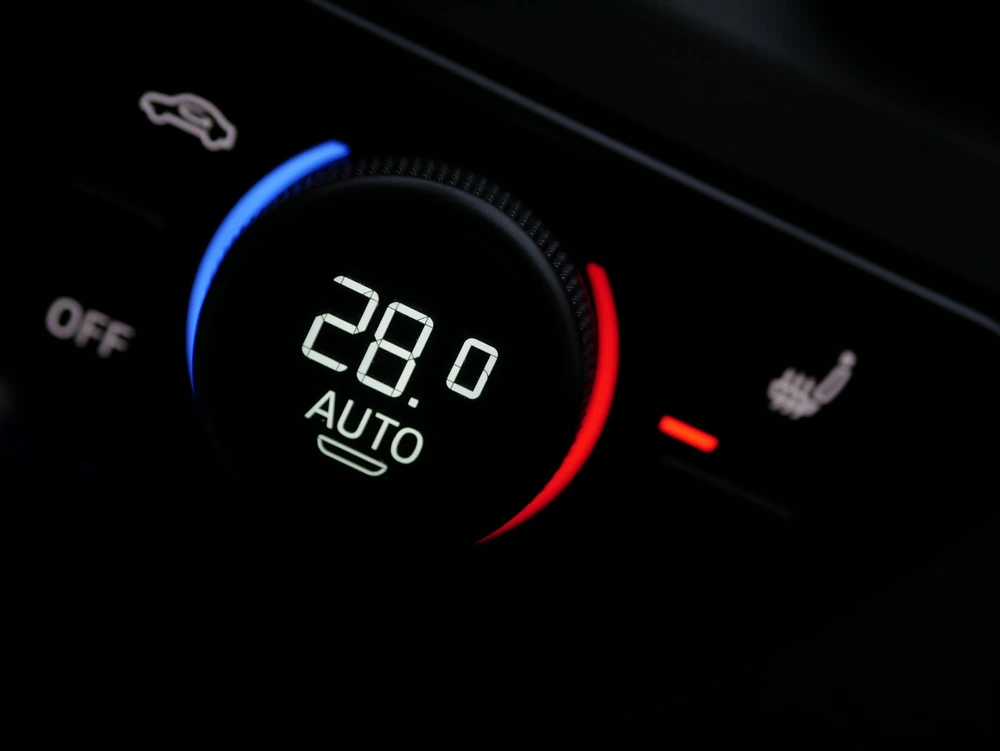
- Heating and air conditioning — cabin climate control draws directly from the battery
- Tyre pressure — under-inflated tyres increase rolling resistance and reduce range
- Payload and passengers — extra weight requires more energy to move
- Terrain — hills cost energy on the way up, though regenerative braking recovers some on the way down
- Stop-start traffic — urban driving at low speeds is generally more efficient than motorway cruising
Driving speed and style
Smooth, progressive acceleration and early braking are the single biggest habits you can change. Aggressive acceleration wastes energy; gentle deceleration lets regenerative braking recover it.
Weather, temperature and battery conditioning
In temperatures below 5°C, real-world range can drop by 20–40%. Preconditioning your battery and cabin while still plugged in preserves range by reducing the energy drawn from the battery once you set off.
Tyres, payload and road conditions
Check tyre pressures weekly. Even 5 PSI below the recommended level adds measurable rolling resistance. Roof boxes and heavy loads have a similar compounding effect on efficiency.
Heating, air conditioning and accessories
Heated seats are far more efficient than the main heater blower for warming the cabin. Seat heating draws a fraction of the energy and keeps occupants comfortable without hammering your range.
Miles per kWh examples by EV type
Comparing efficiency across vehicle categories puts the numbers in context. A figure that looks low for a city car may be genuinely impressive for a large SUV.
| Vehicle type | Typical miles per kWh | Key influencing factor |
|---|---|---|
| Small city EV | 4.0 – 5.5 | Low weight, low speed urban use |
| Family hatchback | 3.5 – 4.5 | Balanced weight and aerodynamics |
| Mid-size SUV | 2.8 – 3.5 | Higher weight and drag |
| Performance EV | 2.0 – 3.0 | Heavy battery, high-speed driving |
Small EVs and city cars
Compact, lightweight city cars consistently achieve the highest efficiency figures. Their small batteries charge quickly, and low urban speeds suit electric drivetrains particularly well.
Family cars and hatchbacks
The sweet spot for most buyers. A good family EV balances usable range with solid efficiency, making it practical for both commuting and longer trips.
SUVs and larger EVs
Larger vehicles carry more weight and push more air out of the way. Efficiency is lower, but manufacturers compensate with bigger batteries to maintain competitive range figures.
Performance EVs and why efficiency is lower
Performance models prioritise power output over economy. Heavy battery packs, wide tyres, and high cruising speeds all reduce miles per kWh significantly compared with standard variants.
How miles per kWh affects charging cost and range
Efficiency is not just a technical number. It directly determines how far you can drive and how much it costs to get there. A small improvement in miles per kWh compounds across every journey you make.
| Efficiency (mi/kWh) | kWh needed per 100 miles | Estimated cost per 100 miles |
|---|---|---|
| 5.0 | 20 kWh | £5.60 |
| 4.0 | 25 kWh | £7.00 |
| 3.0 | 33 kWh | £9.24 |
| 2.0 | 50 kWh | £14.00 |
Estimating range from miles per kWh
Multiply your usable battery capacity by your real-world miles per kWh figure. A 70 kWh usable battery in a car achieving 3.5 miles per kWh gives you approximately 245 miles of real-world range.
Estimating charging cost from miles per kWh
Divide 100 by your miles per kWh figure to get the kWh needed per 100 miles. Multiply that by your electricity rate to find the cost. At home rates — Which? tested one popular EV at 6.53p per mile when charged at home — even a modest efficiency gain saves meaningful money over a year.
Why efficiency matters more for long-distance drivers
For short urban commutes, a less efficient EV is still cheap to run. But on long motorway journeys, lower efficiency means more frequent charging stops and higher public charging costs — RAC data puts rapid charging at around 80p per kWh — which can add up quickly.
How to improve your miles per kWh
You do not need a new car to get better efficiency. Small, consistent changes to how you drive and maintain your EV make a real difference to your everyday range and running costs.
- Accelerate smoothly and progressively rather than sharply from standstill
- Reduce motorway cruising speed from 70 mph to 60 mph where safe and practical
- Use regenerative braking by lifting off the accelerator early rather than braking late
- Precondition the cabin and battery while still plugged in on cold mornings
- Keep tyres inflated to the manufacturer’s recommended pressure
- Remove roof boxes, bike racks, and unnecessary weight when not in use
- Use heated seats instead of the main heater blower to warm the cabin
Driving habits that increase efficiency
Smooth inputs are the foundation. Anticipating traffic flow and coasting to junctions rather than braking sharply allows regenerative braking to recover energy that would otherwise be lost as heat.
Maintenance checks that help
Tyre pressure is the easiest win. Check it monthly and before long trips. Worn or misaligned tyres increase rolling resistance and reduce efficiency without any obvious warning sign on the dashboard.
When ECO mode and regenerative braking matter
ECO mode limits power output and often increases regenerative braking strength, which suits urban driving well. On open roads, the efficiency gain from ECO mode is smaller, but it still encourages smoother throttle inputs.
Frequently asked questions
Is miles per kWh the same as MPG for electric cars?
It is the EV equivalent of MPG, measuring efficiency using electricity instead of fuel. MPG uses gallons; miles per kWh uses kilowatt-hours. The principle is the same: a higher number means better efficiency and lower running costs per mile.
What is a good miles per kWh for an EV?
Above 3.5 miles per kWh is solid performance for most drivers in mixed conditions. Smaller cars regularly exceed 4.5, while large SUVs and performance models often sit below 3.0. Weather and driving style shift the figure in either direction.
Why does my real-world miles per kWh differ from the official figure?
Official WLTP figures are measured in controlled conditions at moderate temperatures and speeds. Cold weather, motorway speeds, heavy loads, and active climate control all reduce real-world efficiency below the lab result. Treat the official figure as a best-case benchmark.
How do I calculate miles per kWh from my car’s display or charging data?
Note the miles driven and kWh consumed from your trip computer or charging app, then divide miles by kWh. For greater accuracy, use the actual energy delivered to the battery rather than the gross capacity figure quoted in the brochure.
Summary and key takeaways
Miles per kWh explained in one sentence: it tells you how efficiently your electric car uses energy, and it connects range, charging cost, and driving behaviour in a single, practical number. Aim for above 3.5 in everyday driving, and remember that official figures are a starting point, not a promise.
The biggest influences on your real-world figure are speed, temperature, and driving style. Small changes — smoother acceleration, correct tyre pressure, preconditioning in winter — add up to meaningful gains over time. Whether you are buying your first EV or already own one, understanding miles per kWh gives you genuine control over your running costs, particularly with upcoming driving law changes including a 3p-per-mile EV road tax from 2028 on the horizon.
If you are thinking about switching to an electric car, understanding the cost to change starts with knowing what your current vehicle is worth. Getting a free valuation takes minutes and puts you in a much stronger position to make the move.
Find out what your car is worth today and take the first step towards your next vehicle with confidence.
The information provided on this page is for general informational purposes only and should not be considered as professional advice.